
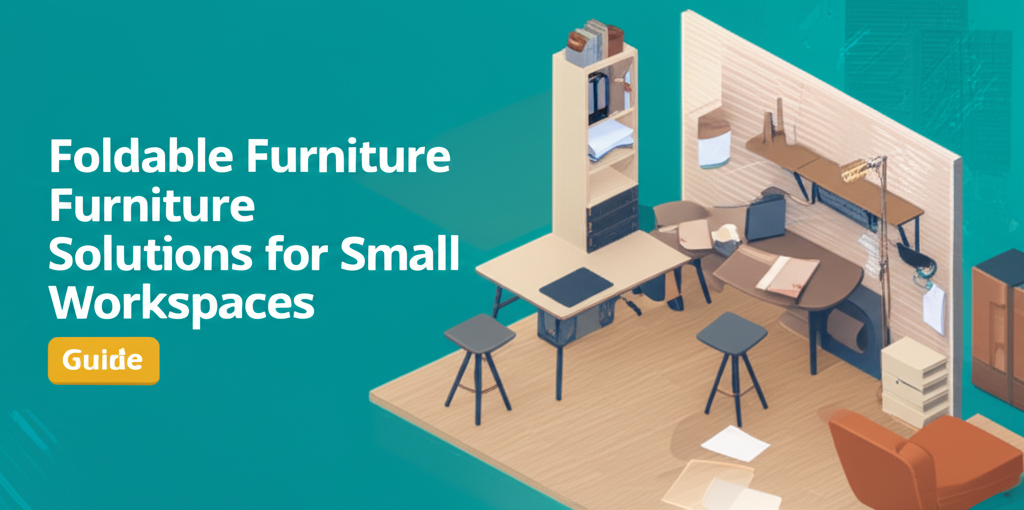
# Foldable Furniture Solutions for Small Workspaces Guide
In an era where remote work and compact living spaces have become the norm, the challenge of creating a functional workspace in limited square footage has never been more relevant. Whether you’re working from a studio apartment, converting a corner of your bedroom into an office, or simply looking to maximize every inch of your home, foldable furniture solutions offer the perfect answer to spatial constraints without compromising on productivity or style.
Traditional office furniture often demands significant floor space that small dwellings simply cannot accommodate. This is where the brilliance of foldable and space-saving designs truly shines. From wall-mounted desks that disappear when not in use to collapsible chairs that store effortlessly in closets, these innovative pieces transform any area into a professional workspace within seconds. The beauty of foldable furniture lies not just in its practicality, but in its ability to maintain the dual functionality of your living spaces—allowing your dining room to be a dining room, and your bedroom to remain a sanctuary for rest.
This comprehensive guide will walk you through the most effective foldable furniture solutions designed specifically for small workspaces. You’ll discover how to select pieces that match your work style, learn about the latest designs combining ergonomics with space efficiency, and explore creative ways to integrate these transformable elements into your home. Get ready to revolutionize your cramped quarters into a versatile, organized, and inspiring work environment that adapts to your daily needs.
## Why Foldable Furniture is Essential for Small Workspaces
The shift toward smaller living arrangements in urban environments has created a pressing need for furniture that adapts to limited space. Foldable furniture addresses this challenge by offering flexibility that conventional pieces cannot match. When you’re working with a workspace that measures less than 100 square feet, every inch counts, and furniture that can be tucked away when not in use becomes invaluable.
Beyond the obvious space-saving benefits, foldable furniture solutions provide psychological advantages as well. The ability to physically separate work from personal time by folding away your desk creates clearer boundaries between professional and private life. This separation is particularly crucial for individuals working from home, where the lines between office and living space often blur. Studies indicate that workers who maintain distinct work zones report higher productivity levels and better work-life balance.
Additionally, foldable furniture solutions offer remarkable versatility for those who frequently relocate or redesign their spaces. Unlike heavy, permanent fixtures, these pieces can be easily transported, reconfigured, or repurposed as your needs evolve. This adaptability makes them an economically smart choice for renters, students, freelancers, and anyone whose living situation may change over time.
## Types of Foldable Desks for Compact Spaces
### Wall-Mounted Drop-Leaf Desks
Wall-mounted drop-leaf desks represent one of the most space-efficient solutions available for small workspaces. These desks attach directly to your wall and fold down when needed, providing a sturdy work surface that completely disappears when not in use. Most models require only 4-6 inches of wall depth when folded, making them ideal for narrow hallways, bedrooms, or even kitchen areas.
When selecting a wall-mounted desk, consider the weight capacity and ensure proper installation into wall studs for maximum stability. Many contemporary designs incorporate built-in storage compartments, shelving, or even charging stations that remain accessible whether the desk is open or closed. The typical surface area ranges from 20 to 40 inches wide, providing adequate space for a laptop, notebook, and essential supplies.
### Convertible Console Tables
Console tables that convert into full workstations offer an elegant solution for those who want their furniture to blend seamlessly with their home décor. These pieces typically appear as slim, decorative tables against a wall but can be extended or unfolded to create a proper desk surface when needed.
The advantage of convertible console tables lies in their dual functionality and aesthetic appeal. Unlike purely utilitarian folding desks, these pieces contribute to your interior design even when not serving their primary workspace function. They commonly feature drawers or hidden compartments for storing office supplies, keeping your essential items organized yet out of sight.
### Floating Murphy Desks
Murphy desks operate on the same principle as Murphy beds, folding up vertically against the wall or into a cabinet. These comprehensive workspace solutions often include integrated shelving, bulletin boards, and organizational features that fold away completely. When closed, a Murphy desk can resemble an attractive cabinet, wall art, or decorative panel.
The installation of a Murphy desk requires more commitment than other foldable options, as it typically involves mounting a substantial cabinet system to your wall. However, the payoff is significant: a complete office that vanishes entirely, leaving no trace of your workspace behind. This makes Murphy desks particularly valuable in studio apartments or multipurpose rooms.
## Space-Saving Seating Solutions
### Folding Chairs with Ergonomic Design
While foldable chairs once carried a reputation for being uncomfortable and purely functional, modern designs have dramatically improved both ergonomics and aesthetics. Today’s folding chairs feature padded seats, lumbar support, and adjustable components that rival traditional office chairs in comfort.
When choosing a folding chair for extended work sessions, prioritize models with cushioned seats and breathable materials. The best options include contoured backs that support proper posture and armrests that reduce shoulder strain. Look for chairs that fold flat to slip behind doors or under beds, with a thickness of 3-4 inches when collapsed.
### Stackable Stools and Compact Task Chairs
For workspaces where storage is extremely limited, stackable stools offer a minimalist alternative to full chairs. Modern task stools designed for small spaces often include height adjustment features and 360-degree swivel capabilities while maintaining a compact footprint of less than 15 inches in diameter.
These compact seating solutions work particularly well in spaces where the desk itself is small, as they can be tucked completely underneath when not in use. Some innovative designs feature collapsible legs or telescoping mechanisms that reduce their storage height by 50% or more.
## Storage Solutions That Fold and Adapt
Effective workspace organization extends beyond desks and chairs to include storage systems that accommodate the changing nature of foldable furniture. Collapsible storage bins, hanging organizers, and modular shelving units that can be reconfigured help maintain order without consuming precious floor space.
Rolling storage carts with multiple tiers provide mobile organization that can be positioned beside your workspace when needed and rolled into a closet or corner when work is complete. Look for carts with locking wheels to ensure stability during use and models that fit through standard doorways, typically 24 inches wide or less.
Wall-mounted organizational systems with fold-out components offer another excellent solution. These include pegboards with retractable accessories, magnetic strips for tool storage, and fold-down filing systems that keep important documents accessible yet hidden when your workspace is closed.
## Key Considerations When Selecting Foldable Furniture
### Stability and Durability
The primary concern with any foldable furniture is ensuring it provides stable support during use. Examine the locking mechanisms and joint construction carefully. Quality pieces feature reinforced hinges, secure latches, and solid materials that prevent wobbling or collapse during normal use.
Test the furniture’s stability before purchasing if possible. A desk should not shake when you type, and chairs should feel secure when bearing weight. Check weight ratings, which typically range from 150 to 300 pounds for chairs and 50 to 100 pounds for desk surfaces.
### Ease of Setup and Storage
Furniture that requires complex assembly and disassembly processes defeats the purpose of convenience. The best foldable furniture solutions transform in seconds with simple, intuitive mechanisms. Consider how often you’ll need to fold and unfold each piece—daily users require simpler mechanisms than those who reconfigure weekly.
Measure your storage space before purchasing to ensure folded furniture fits comfortably. Account for the clearance needed during the folding process, as some pieces require additional space to maneuver when transitioning between configurations.
### Material Quality and Maintenance
Durable materials ensure your foldable furniture withstands repeated use. Solid wood, high-grade plywood, and steel frames generally outlast particle board and plastic alternatives. However, premium materials increase weight, which may complicate the folding process for some users.
Consider maintenance requirements as well. Smooth surfaces that wipe clean easily are ideal for workspace furniture. Avoid fabrics that trap dust or require special cleaning unless they’re removable and washable.
## Creating a Functional Layout with Foldable Elements
Strategic placement of foldable furniture maximizes both functionality and space efficiency. Position wall-mounted desks near natural light sources when possible, as adequate lighting reduces eye strain and improves mood. Ensure electrical outlets are accessible for computers and devices without requiring extension cords that create tripping hazards.
Consider the traffic flow through your space when planning your foldable workspace. Your desk and chair should deploy without blocking doorways or essential pathways. Create a dedicated zone for your workspace, even if temporary, to establish psychological boundaries and improve focus.
Vertical space utilization complements foldable furniture beautifully. Install shelving above your folding desk to keep supplies accessible without consuming floor space. Use the area beneath wall-mounted desks for storage baskets or bins that can remain in place even when the desk is closed.
## Conclusion
Foldable furniture solutions transform the challenge of small workspaces into an opportunity for creative, efficient design. By selecting pieces that fold, collapse, or convert based on your specific needs, you can create a professional workspace that adapts to your lifestyle rather than dominating it. The key lies in choosing quality pieces that balance stability with portability, functionality with aesthetics, and convenience with durability. With thoughtful planning and the right foldable furniture, even the smallest space can accommodate a productive, comfortable, and inspiring work environment.
## Conclusion
Foldable furniture solutions represent a practical and innovative answer to the growing challenge of maximizing productivity in limited spaces. As we’ve explored throughout this guide, the benefits extend far beyond simple space savings—these versatile pieces offer psychological advantages through better work-life separation, economic benefits through their adaptability, and design flexibility that allows your workspace to evolve with your changing needs.
The variety of options available ensures there’s a foldable furniture solution for every situation. Whether you choose the space-efficiency of wall-mounted drop-leaf desks, the elegance of convertible console tables, or the comprehensive functionality of Murphy desks, each option provides unique advantages tailored to different workspace requirements. Complementing these with ergonomic folding chairs, stackable stools, and adaptable storage systems creates a complete workspace ecosystem that can appear and disappear as needed.
When selecting your foldable furniture, remember to prioritize the three essential factors: stability and durability for safe daily use, ease of setup and storage for practical convenience, and quality materials that will withstand repeated folding cycles. Test mechanisms before purchasing, measure your available space carefully, and consider how each piece will integrate into your daily routine and overall room design.
Creating an effective foldable workspace requires thoughtful planning—from strategic placement near natural light and power sources to considering traffic flow and vertical storage opportunities. By approaching your small workspace as a design challenge rather than a limitation, you can craft an environment that supports focus, creativity, and productivity while maintaining the flexibility to reclaim your living space when work is complete.
Ready to transform your cramped quarters into a functional, flexible workspace? Start by assessing your specific needs: measure your available space, identify which furniture pieces you use most frequently, and determine your budget. Browse reviews and specifications for the foldable furniture types discussed in this guide, and don’t hesitate to invest in quality pieces that will serve you reliably for years to come. Your ideal workspace solution is out there—one that folds away seamlessly while providing all the functionality and comfort you need to do your best work. Take the first step toward reclaiming your space and enhancing your productivity by exploring foldable furniture options that fit your unique situation.
