
Working from home in a compact apartment or cramped office space doesn’t mean you have to sacrifice your health and productivity. Standing desk converters have revolutionized the way we approach workspace ergonomics, offering a flexible solution that transforms any existing desk into a sit-stand workstation without requiring a complete furniture overhaul. For those dealing with limited square footage, finding the right standing desk converter becomes even more crucial—you need a device that maximizes functionality while minimizing its footprint.
The market is flooded with standing desk converters claiming to be space-saving solutions, but not all are created equal. Some models are bulky and intrusive, eating up valuable desk real estate you simply can’t afford to lose. Others lack the stability and adjustability needed to create a truly comfortable working environment. The challenge is finding that sweet spot: a converter that’s compact enough to fit your limited space, yet robust enough to support your monitor, keyboard, and other essentials throughout your workday.
That’s exactly why we’ve tested and reviewed the best standing desk converters specifically designed for small spaces. Whether you’re working from a studio apartment, a shared office, or a cozy home workspace, this comprehensive guide will help you discover the most space-efficient standing desk converters that deliver on comfort, stability, and adjustability without overwhelming your limited work area. Let’s explore the top options that prove you don’t need a spacious office to enjoy the health benefits of standing while you work.
What Makes a Standing Desk Converter Ideal for Small Spaces?
Before diving into specific product recommendations, it’s essential to understand what characteristics separate genuinely compact standing desk converters from those that merely claim to be space-saving. The best converters for small spaces share several key features that make them practical for tight quarters.
First and foremost, the base footprint matters tremendously. While a full-sized standing desk converter might occupy 35 inches of width, compact models typically measure between 24 to 30 inches wide, leaving more room for other desk essentials like notebooks, coffee cups, or decorative items that make your workspace feel personal.
Height adjustment mechanism is another crucial factor. Gas spring systems and manual lift mechanisms tend to be more compact than electric motors, which require bulkier housing. For small spaces, manual systems often provide the best combination of slim profile and reliable functionality.
Weight capacity shouldn’t be overlooked either. Even space-saving models should comfortably support at least 15 to 20 pounds, accommodating a laptop or monitor plus keyboard without wobbling or sagging. The structural integrity becomes even more important in converters with smaller bases, as they have less surface area to distribute weight.
Top Standing Desk Converters for Compact Workspaces
Single-Tier Minimalist Converters
Single-tier standing desk converters represent the ultimate in space efficiency. These streamlined designs eliminate the separate keyboard tray found on two-tier models, creating a unified work surface that accommodates both your monitor and keyboard on the same level. This design philosophy works exceptionally well for laptop users or those with wireless keyboards who can easily rearrange their setup.
The main advantage of single-tier converters is their remarkably shallow depth profile. Most models extend just 20 to 24 inches from the back of your desk, compared to 28 to 32 inches for two-tier alternatives. This depth reduction can be transformative in small spaces, preventing your standing converter from dominating the entire desk surface.
These converters typically feature a simple gas spring adjustment system that allows smooth height transitions with minimal effort. The lifting mechanism is usually activated by squeezing handles on either side of the platform, making it easy to switch between sitting and standing positions throughout your workday. Weight capacities generally range from 15 to 25 pounds, perfectly adequate for most laptop and single-monitor setups.
Compact Two-Tier Options
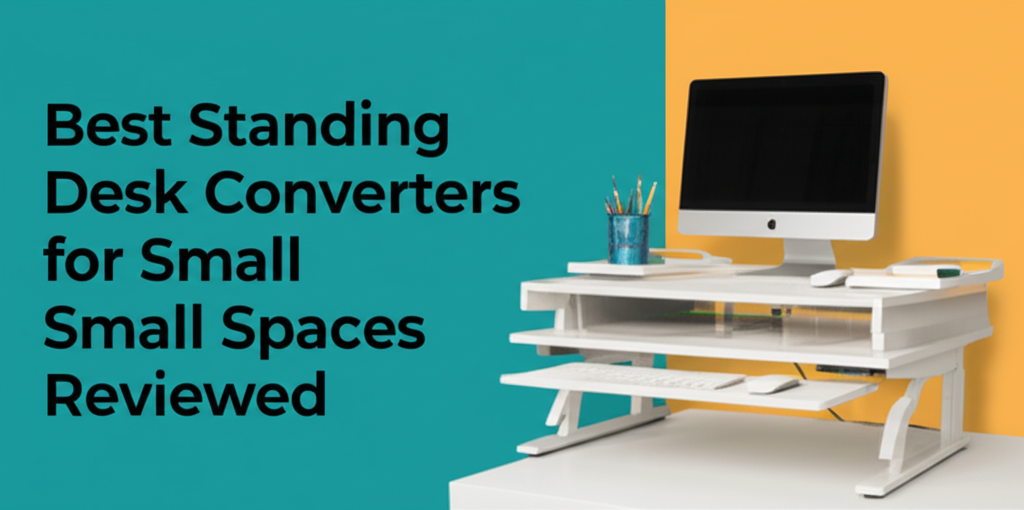
For those who prefer traditional ergonomics with separate monitor and keyboard levels, compact two-tier converters offer a space-conscious alternative to full-sized models. These designs maintain the ergonomic benefits of dedicated surfaces while incorporating space-saving engineering throughout their construction.
The keyboard tray on compact two-tier converters is typically narrower than standard models, measuring around 23 to 26 inches wide rather than the usual 28 to 32 inches. This reduction might seem minor, but it translates to several precious inches of desk space preserved on either side of the converter. The keyboard platform usually extends just 10 to 12 inches from the main surface, keeping the overall footprint manageable.
Height adjustment ranges on these converters generally span from 4 to 16 inches above desk level, accommodating users from approximately 5’2″ to 6’2″ comfortably. The dual-tier design naturally creates better monitor positioning, elevating your screen to proper eye level without requiring additional monitor stands or risers.
Corner-Mounted Solutions
An innovative category worth considering for extremely tight spaces is corner-mounted standing desk converters. These specialized units attach directly to corner desk configurations, leveraging otherwise underutilized workspace geometry. While less common than traditional freestanding converters, corner models can be remarkably effective in specific room layouts.
Corner converters typically feature an L-shaped or triangular platform that fits snugly into desk corners, with mounting brackets or clamps securing them to both desk edges. This configuration provides surprising stability despite the unconventional mounting approach. The work surface area usually accommodates a laptop or small monitor plus keyboard, making them suitable for streamlined setups.
Key Features to Consider When Shopping
Adjustment Mechanism and Ease of Use
The method by which your standing desk converter raises and lowers significantly impacts both its spatial footprint and daily usability. Gas spring systems remain the most popular choice for compact converters, offering smooth operation without electricity while maintaining a relatively slim profile. These mechanisms typically require both hands to operate, with handles positioned on either side of the platform.
Some budget-friendly compact converters use counterbalance systems with manual pins or levers. While these take slightly more effort to adjust, they’re incredibly reliable and feature the slimmest possible profiles since they lack complex mechanical components. The trade-off is that height adjustments take a few extra seconds compared to gas spring alternatives.
Stability and Build Quality
Compact standing desk converters must work harder to achieve stability due to their reduced base size. Look for models constructed from steel or aluminum frames rather than plastic components. Metal construction provides rigidity that prevents wobbling when typing, even when the converter is elevated to maximum height.
The work surface material matters as well. High-quality converters feature either solid wood surfaces or thick composite materials that resist flexing under monitor weight. Avoid converters with thin particleboard surfaces, which tend to bow over time, especially near the edges where monitors are typically positioned.
Weight and Portability
In small spaces, you might need to occasionally move your standing desk converter to access items behind it or reconfigure your workspace. Converters designed for compact environments typically weigh between 20 to 35 pounds—heavy enough to remain stable during use but light enough to relocate when necessary.
Some models incorporate built-in handles or grip areas that make lifting and moving easier. This thoughtful design consideration becomes particularly valuable if you share your workspace with others or need to completely clear your desk periodically.
Making the Most of Your Small Space Setup
Once you’ve selected a standing desk converter appropriate for your limited square footage, strategic placement and organization maximize its effectiveness. Position your converter to leave at least a few inches of desk space on one or both sides for frequently accessed items like phones, notebooks, or beverages.
Consider using vertical space more efficiently by adding a small monitor arm to your converter, which elevates the screen without requiring a larger base platform. Many compact converters feature VESA mounting holes or sufficient structural strength to support clamp-style monitor arms.
Cable management becomes even more critical in small spaces, where visible wires quickly create visual clutter. Look for converters with integrated cable routing channels or attachment points for cable clips. Keeping cords organized not only improves aesthetics but also prevents tangling when raising and lowering your work surface.
Conclusion: Finding Your Perfect Compact Solution
Standing desk converters designed for small spaces prove that limited square footage doesn’t mean compromising on ergonomics or wellness. By focusing on compact footprints, efficient designs, and smart features, these specialized converters deliver the health benefits of sit-stand working without overwhelming tight quarters. Whether you choose a minimalist single-tier model, a compact two-tier design, or an innovative corner-mounted solution, the right converter transforms even the smallest workspace into an ergonomic, health-conscious environment that supports productivity and well-being throughout your workday.
Conclusion: Transform Your Small Workspace Today
Finding the perfect standing desk converter for a small space doesn’t have to be a compromise between functionality and footprint. As we’ve explored throughout this review, compact standing desk converters offer sophisticated solutions that bring ergonomic benefits to even the tightest workspaces without sacrificing quality or performance.
The key takeaways for selecting your ideal compact converter center around three essential considerations: footprint dimensions, adjustment mechanisms, and build quality. Single-tier minimalist converters excel for laptop users and those seeking the slimmest possible profile, while compact two-tier options maintain traditional ergonomic separation between monitor and keyboard surfaces. For unique workspace configurations, corner-mounted solutions leverage underutilized desk geometry to maximize available space.
Remember that the best converter for your small space should feature a base width between 24 to 30 inches, support at least 15 to 20 pounds of equipment weight, and incorporate reliable gas spring or manual adjustment systems that maintain a slim profile. Metal frame construction ensures stability, while thoughtful details like integrated cable management and built-in handles enhance daily usability in confined areas.
Strategic placement and organization amplify the effectiveness of any compact standing desk converter. By positioning your unit to preserve a few inches of desk space on the sides, utilizing vertical space with monitor arms, and implementing smart cable management solutions, you’ll create a workspace that feels open and organized despite limited square footage.
Don’t let a small workspace prevent you from enjoying the health and productivity benefits of standing while you work. Take action today by measuring your available desk space, identifying which converter style best matches your equipment needs, and investing in a quality compact standing desk converter. Your back, neck, and overall well-being will thank you for making the switch to a more dynamic, ergonomic work environment.
Ready to transform your cramped desk into an efficient, health-conscious workspace? Start comparing compact standing desk converters now and take the first step toward a more comfortable, productive workday. Your perfect space-saving solution is waiting—all it takes is the decision to prioritize your wellness, regardless of your workspace size.
