
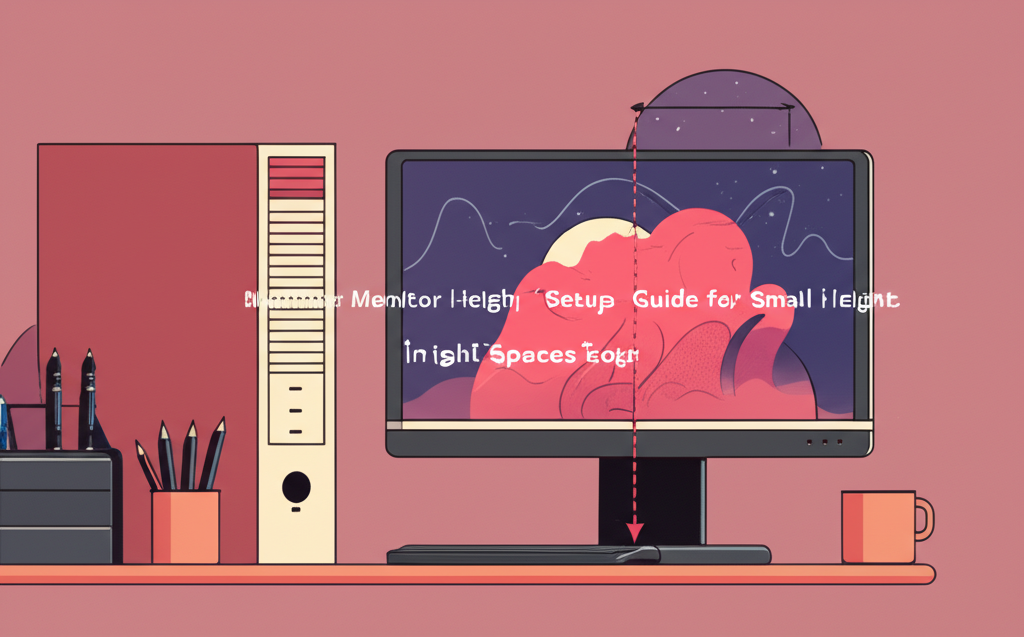
Working in a cramped office space or a compact home setup doesn’t mean you should compromise on ergonomics. Many people struggle with neck pain, eye strain, and poor posture simply because their monitor sits at the wrong height—a problem that becomes even more challenging when you’re dealing with limited desk space. The good news is that achieving proper monitor height isn’t about having a spacious workstation; it’s about understanding the right techniques and using smart solutions that work within your constraints.
Whether you’re setting up a workspace in a small apartment, a cluttered office cubicle, or a tiny dorm room, proper monitor positioning is crucial for your long-term health and productivity. The ideal monitor height places the top of your screen at or slightly below eye level, allowing you to maintain a neutral neck position throughout your workday. However, when space is at a premium, traditional monitor stands and adjustable arms might not be practical options, forcing you to get creative with your setup.
This comprehensive guide will walk you through everything you need to know about establishing the perfect monitor height in tight spaces. From understanding the ergonomic principles behind proper screen positioning to discovering space-saving solutions and DIY hacks, you’ll learn how to create a comfortable and healthy workspace regardless of your square footage limitations. Let’s transform your cramped setup into an ergonomically sound environment that supports your wellbeing without requiring a complete room makeover.
Understanding the Ergonomic Principles of Monitor Height
Before diving into specific solutions for small spaces, it’s essential to understand what constitutes proper monitor height and why it matters. The primary goal of ergonomic monitor positioning is to reduce strain on your neck, shoulders, and eyes while maintaining a comfortable viewing angle throughout extended periods of computer use.
The golden rule of monitor height is straightforward: when sitting upright with your head in a neutral position, your eyes should naturally align with a point approximately 2-3 inches below the top of your screen. This positioning allows you to view the upper portion of your display without tilting your head backward and the center of the screen with only a slight downward gaze of about 10-20 degrees, which is the most natural and comfortable viewing angle for your eyes.
Research consistently shows that improper monitor height contributes to a range of musculoskeletal problems. When your screen sits too low, you unconsciously bend your neck forward, placing excessive strain on the cervical spine and surrounding muscles. Conversely, a monitor positioned too high forces you to tilt your head backward, creating tension in the neck extensors and potentially causing headaches. Both scenarios can lead to chronic discomfort that impacts your productivity and quality of life.
The Viewing Distance Factor
Monitor height doesn’t work in isolation—viewing distance plays an equally critical role in ergonomic setup. Ideally, your screen should sit at arm’s length away, typically between 20 and 40 inches from your eyes, depending on screen size. In tight spaces, maintaining both proper height and distance can be challenging, but understanding this relationship helps you make informed compromises when necessary.
Measuring Your Ideal Monitor Height
Establishing the correct monitor height for your body starts with a simple measurement process. Sit in your usual working position with your feet flat on the floor and your back supported by your chair. Look straight ahead without tilting your head up or down—this is your natural eye level. Have someone mark this point on a wall or use a tape measure to record the height from the floor to your eyes.
Once you have this measurement, subtract 2-3 inches to find where the top of your monitor should be positioned. If you’re using a laptop, the calculation remains the same, though you’ll likely need even more creative solutions to achieve proper height given the integrated keyboard-screen design.
Space-Saving Monitor Height Solutions
When traditional monitor arms and bulky stands aren’t feasible options, several compact solutions can help you achieve proper ergonomic positioning without consuming valuable desk real estate.
Monitor Risers and Compact Stands
Monitor risers designed specifically for small spaces offer an excellent starting point. Look for models with a minimal footprint that elevate your screen while providing storage space underneath for keyboards, notebooks, or office supplies. This dual functionality maximizes efficiency in cramped quarters. Some compact risers feature adjustable heights through stacking components or telescoping legs, giving you flexibility to fine-tune positioning without occupying additional space.
Wall-Mounted Monitor Arms
Wall mounting eliminates the need for any desk space dedicated to monitor support. Modern low-profile wall arms can extend, retract, tilt, and rotate, providing full ergonomic adjustability while keeping your desk surface completely clear. This solution works particularly well in corners or against walls where desk space is extremely limited. Ensure your wall can support the weight and that you’re allowed to drill if you’re in a rental situation.
Clamp-Mounted Solutions
Desk clamp monitor arms attach to the edge of your workspace, freeing up the entire desk surface while providing extensive adjustability. These are ideal for tight spaces because they don’t require any desk surface area for the base. Modern clamp designs are compact and can fit on desks with depths as shallow as 10 inches, making them viable even for the smallest workstations.
DIY Solutions for Budget-Conscious Setups
Professional monitor stands and arms can be expensive, but numerous DIY approaches achieve similar results at a fraction of the cost. Books, sturdy shoeboxes, or reams of paper can create stable platforms for monitor elevation. For a more polished appearance, wooden blocks or risers cut to precise heights provide both functionality and aesthetic appeal.
Storage containers with lids offer another creative solution, simultaneously raising your monitor and providing organizational space inside. Clear acrylic containers work particularly well because they maintain visual openness in small spaces, preventing the setup from feeling cluttered or closed-in.
Creating Custom Shelving
Installing a narrow floating shelf at the precise height needed for your monitor eliminates the guesswork entirely. This approach works especially well in extremely tight spaces because the shelf can be cut to exact dimensions, fitting perfectly into awkward corners or narrow gaps. The monitor sits on the shelf at the ideal height while the desk below remains available for keyboards, documents, and other essentials.
Laptop-Specific Height Considerations
Laptops present unique challenges in tight spaces because raising the screen to proper height makes the integrated keyboard unusable. The solution requires separating input devices from the display. A compact external keyboard and mouse paired with a laptop stand creates an ergonomic setup that doesn’t consume excessive space.
Look for laptop stands designed with small footprints—some models fold flat when not in use or feature vertical designs that hold your laptop upright, minimizing desk space requirements. Pairing these with compact wireless keyboards and mice keeps cable clutter manageable in confined areas.
Optimizing Your Chair Height
Sometimes adjusting your chair height proves easier than changing monitor position, particularly in extremely constrained spaces. If raising your monitor isn’t feasible, lowering your seated position can achieve proper viewing angles. Ensure your feet remain flat on the floor or on a footrest, and your thighs are parallel to the ground to maintain proper posture throughout your lower body.
Multi-Monitor Setups in Small Spaces
Running multiple monitors in tight quarters requires careful planning. Stack monitors vertically rather than horizontally to minimize width requirements while maintaining ergonomic viewing angles. The primary monitor should sit at optimal height with the secondary screen positioned directly above or below, depending on usage patterns and neck comfort.
Alternatively, consider using a single larger monitor instead of multiple smaller screens. Modern wide-format displays provide substantial screen real estate while occupying less physical space than multi-monitor configurations.
Testing and Adjusting Your Setup
After implementing your chosen solution, spend time evaluating comfort levels. Work for several hours, paying attention to any neck tension, eye strain, or postural discomfort. Minor adjustments of even an inch or two can significantly impact comfort. Don’t hesitate to experiment with slight variations until you find the position that feels most natural.
Remember that proper monitor height represents just one component of ergonomic workspace design. Combine appropriate screen positioning with good lighting, regular breaks, and attention to keyboard and mouse placement for comprehensive ergonomic benefits in your compact workspace.
Conclusion: Creating Your Ergonomic Workspace in Any Space
Setting up proper monitor height in tight spaces doesn’t have to be an insurmountable challenge. As we’ve explored throughout this guide, achieving ergonomic comfort is entirely possible regardless of your workspace limitations. The key is understanding the fundamental principle that your eyes should align approximately 2-3 inches below the top of your screen, creating a natural downward viewing angle of 10-20 degrees that minimizes strain on your neck, shoulders, and eyes.
Whether you choose compact monitor risers that provide dual functionality with built-in storage, space-saving wall-mounted or clamp-mounted arms that free up your entire desk surface, or budget-friendly DIY solutions using everyday household items, the right approach depends on your specific space constraints, budget, and aesthetic preferences. For laptop users, pairing a compact stand with external peripherals transforms an otherwise problematic setup into an ergonomic workstation that fits comfortably in even the smallest spaces.
Remember that small adjustments can yield significant results. Sometimes the solution is as simple as optimizing your chair height rather than modifying your monitor position, or choosing a vertical monitor arrangement instead of a horizontal one for multi-screen setups. The beauty of ergonomic design lies in its flexibility—there’s no single “correct” solution, only the configuration that works best for your body, your space, and your working style.
Don’t underestimate the importance of testing and fine-tuning your setup. Spend several working sessions evaluating your comfort levels, paying close attention to any signs of neck tension, eye strain, or postural discomfort. Even minor adjustments of an inch or two can dramatically improve your comfort and productivity over extended periods.
Take action today to transform your workspace. Start by measuring your ideal monitor height using the simple technique outlined in this guide. Assess your available space and budget, then choose the solution that best addresses your constraints. Whether you invest in a professional mounting system or create a DIY riser from materials you already have at home, the investment in your physical comfort and long-term health is invaluable.
Your body will thank you for prioritizing ergonomics, even in the tightest of spaces. Reduced neck and shoulder pain, fewer headaches, decreased eye strain, and improved focus are just some of the benefits you’ll experience once your monitor is positioned correctly. Don’t let limited space become an excuse for poor ergonomics—implement these solutions and start working more comfortably today.
Have you successfully optimized your monitor height in a small space? Share your creative solutions and experiences in the comments below to help others facing similar challenges!
