
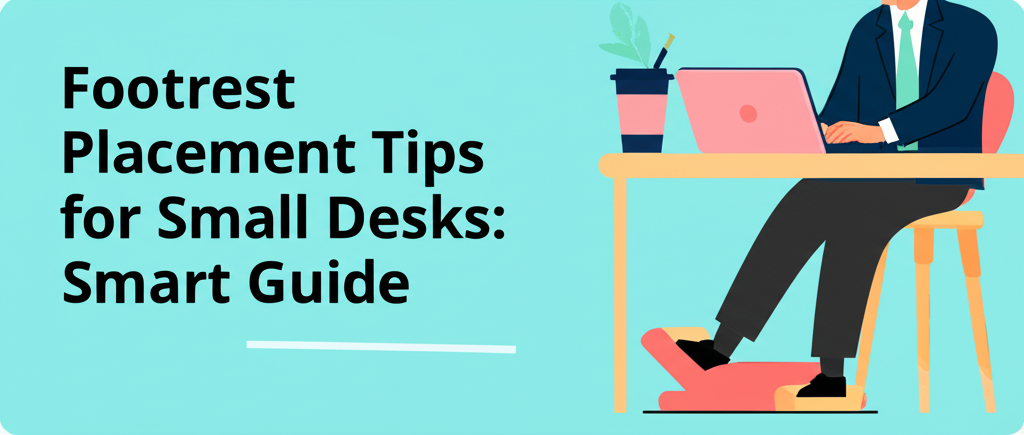
# Footrest Placement Tips for Small Desks: Smart Guide
Working at a small desk doesn’t mean you have to sacrifice comfort or proper ergonomics. Many professionals and remote workers struggle with limited workspace, often neglecting essential accessories like footrests that can dramatically improve posture, circulation, and overall well-being during long work sessions. The challenge isn’t whether you need a footrest—it’s finding the perfect placement strategy that maximizes both comfort and your precious desk real estate.
A properly positioned footrest can be a game-changer for your workspace setup, reducing lower back strain, preventing leg fatigue, and promoting better sitting posture even in the tightest of spaces. The key lies in understanding how to strategically place this simple yet powerful ergonomic tool without creating clutter or limiting your leg movement. Whether you’re working from a compact apartment, a cozy home office, or a minimalist workstation, the right footrest placement can transform your daily comfort level.
In this comprehensive guide, we’ll explore practical placement strategies specifically designed for small desk environments, helping you discover optimal positioning techniques that work with your unique space constraints. From measuring your available floor space to selecting adjustable options and implementing creative placement solutions, you’ll learn everything needed to integrate a footrest seamlessly into your compact workspace while reaping all the ergonomic benefits it offers.
## Understanding Your Space Constraints
Before placing a footrest under your small desk, you need to accurately assess your available space. Start by measuring the width, depth, and height clearance beneath your desk. Most compact desks provide between 22 to 26 inches of depth, which significantly impacts footrest positioning options. Take note of any obstructions such as desk legs, crossbars, computer towers, or cable management systems that might interfere with placement.
Consider your chair’s position and range of movement as well. When seated in your natural working position, measure the distance from the front edge of your chair to any obstacles. This measurement helps determine the maximum footrest size that will comfortably fit without forcing you to sit too far forward or backward. Remember that you’ll need at least 2-3 inches of clearance on each side of the footrest for comfortable foot positioning and easy adjustment throughout the day.
Document the height from floor to the underside of your desk as well. Standard desk heights range from 28 to 30 inches, but smaller desks sometimes sit lower. This vertical clearance determines whether you can use a taller adjustable footrest or need to opt for a low-profile model. Ergonomic specialists recommend maintaining at least 4-5 inches of clearance above your footrest to prevent knee collision with the desk underside.
## Choosing the Right Footrest Size for Compact Spaces
Not all footrests are created equal, and size matters tremendously in small desk setups. Compact footrests typically measure between 12 to 16 inches in width, making them ideal for tight spaces while still providing adequate foot support. Look for models with dimensions that leave at least an inch of clearance on each side when centered under your sitting position.
The depth of your footrest should be proportional to your available floor space. Shallow footrests measuring 10-12 inches front-to-back work well for very limited areas, while standard 14-inch depths offer more positioning flexibility. Consider that your feet should rest comfortably on the platform without your toes hanging off the front edge or your heels extending beyond the back.
Height adjustability becomes crucial in small spaces because it allows you to customize the footrest to your body proportions without requiring additional floor space. Adjustable models typically range from 3.5 to 5 inches in height, accommodating users of various statures. Fixed-height footrests may save a few dollars but can create ergonomic compromises in already constrained environments.
## Optimal Placement Techniques
Centered Positioning Method
The most common and ergonomically sound placement involves centering the footrest directly beneath your seated position. Sit in your chair as you normally would while working, then position the footrest so it aligns with your natural foot placement. Your knees should form approximately 90-degree angles, with your thighs parallel to the floor and feet resting flat on the footrest surface.
For small desks, centered placement works best when you maintain a consistent working position. Mark the optimal footrest location with removable tape or floor markers to ensure consistent placement if you need to move it for cleaning or to access items stored nearby. This positioning method typically requires 18-20 inches of clear floor space front-to-back from your chair’s front edge.
Offset Positioning Strategy
When desk legs or other obstacles prevent centered placement, an offset strategy can work effectively. Position the footrest slightly to your dominant side—typically your right side if you’re right-handed. This arrangement still provides ergonomic benefits while working around spatial constraints. Your body naturally adapts to minor asymmetries, though you should occasionally alternate foot positions to prevent muscle imbalances.
Offset placement requires careful attention to hip and spine alignment. Your pelvis should remain level and centered on your chair, even though your feet rest slightly off-center. This technique works particularly well with corner desks or L-shaped workstations where leg space varies depending on which direction you face.
## Space-Saving Footrest Features to Consider
Modern footrest designs incorporate several space-efficient features ideal for small desk environments. Collapsible or foldable footrests allow you to tuck them away when not in use, freeing up valuable floor space during non-working hours. These models typically fold flat to less than 2 inches in height and can slide under low-clearance furniture or stand vertically against a wall.
Rolling footrests equipped with small casters offer mobility benefits in cramped quarters. You can easily slide them aside when you need to access storage drawers, retrieve dropped items, or accommodate visitors in your workspace. Look for models with locking wheels to prevent unwanted movement during use, as stability remains essential for proper ergonomic support.
Multi-functional footrests combine support surfaces with storage compartments, massage features, or heating elements. While these add functionality, carefully evaluate whether the extra bulk justifies the benefits in your limited space. A simple, streamlined design often proves more practical than feature-rich models that consume precious square footage.
## Maintaining Ergonomic Standards in Limited Spaces
Even with space constraints, certain ergonomic principles remain non-negotiable for health and comfort. Your feet should rest flat on the footrest with your ankles at approximately 90-degree angles. Research indicates that proper lower body positioning reduces pressure on the lumbar spine by up to 30 percent compared to dangling feet or improper support.
The footrest surface should provide enough room for subtle position changes throughout the day. Experts recommend shifting your foot placement every 20-30 minutes to promote circulation and prevent stiffness. This requires a footrest platform large enough to accommodate front-to-back rocking motions and side-to-side adjustments, even in compact models.
Consider the footrest’s tilt angle options as well. A slight incline of 10-15 degrees encourages active sitting and gentle calf stretching, which benefits circulation during prolonged sitting. Some compact models offer adjustable angles, providing ergonomic versatility without requiring additional floor space for different positioning modes.
## Creative Placement Solutions for Extremely Tight Spaces
When floor space is at an absolute premium, think vertically and creatively. Under-desk mounting systems allow you to attach compact footrest platforms directly to the desk’s underside, eliminating the floor footprint entirely. These suspended designs work particularly well with standing desk converters or adjustable-height desks where traditional footrests create obstacles during height transitions.
Alternative solutions include installing a footrest bar or rail along your desk’s lower front edge. These minimal designs provide a simple elevated surface for foot placement without the bulk of traditional platform footrests. Though they offer fewer positioning options, they consume virtually no floor space and never interfere with chair movement or leg clearance.
For shared or multi-use spaces, consider keeping a portable footrest nearby that you bring into position only during active work sessions. Lightweight models weighing less than 3 pounds can easily store in nearby closets, under beds, or behind doors, appearing only when needed and disappearing when your small desk must serve other purposes.
## Testing and Adjusting Your Setup
After initial placement, spend several work sessions evaluating your footrest position before committing to a permanent arrangement. Pay attention to pressure points, fatigue patterns, and any discomfort in your feet, legs, or lower back. Optimal placement should feel natural and reduce strain rather than create new tension points.
Make micro-adjustments as needed, moving the footrest forward or backward in small increments of 1-2 inches until you find the sweet spot. Document your final measurements and positioning details so you can quickly recreate the optimal setup if the footrest gets moved. These small refinements often make the difference between adequate and exceptional ergonomic support in space-limited environments.
## Conclusion
Successfully integrating a footrest into a small desk setup requires thoughtful planning and strategic placement, but the ergonomic benefits are well worth the effort. As we’ve explored throughout this guide, the key to success lies in accurately measuring your available space, selecting appropriately sized equipment, and implementing smart placement techniques that work within your constraints.
Remember that proper footrest placement begins with understanding your space limitations. By measuring the width, depth, and height clearance under your desk, you can identify which footrest sizes and styles will work best for your specific situation. Compact footrests measuring 12 to 16 inches in width typically provide the ideal balance between support and space efficiency.
When it comes to placement, you have multiple options depending on your desk configuration. Centered positioning offers the most ergonomic benefits when space permits, while offset strategies provide viable alternatives when obstacles interfere with ideal placement. For extremely tight spaces, creative solutions like under-desk mounting systems, footrest rails, or portable models that you can store when not in use offer practical alternatives to traditional floor-standing designs.
Don’t compromise on ergonomic standards simply because you’re working with limited space. Maintaining proper 90-degree angles at your knees and ankles, ensuring adequate room for position changes throughout the day, and selecting footrests with appropriate tilt options all contribute to reducing lower back strain and improving circulation during long work sessions.
Space-saving features like collapsibility, rolling casters, and adjustable heights can significantly enhance your footrest’s functionality without demanding additional floor space. However, prioritize stability and comfort over extra features—a simple, well-placed footrest often outperforms a feature-rich model that doesn’t fit properly in your workspace.
Take action today to improve your workspace ergonomics. Start by measuring your desk area and assessing your current setup against the guidelines outlined in this article. Identify any adjustments needed to optimize your footrest placement, and don’t hesitate to experiment with different positions during a trial period. Small refinements in placement can yield significant improvements in comfort and productivity.
Whether you’re setting up a home office in a compact apartment, optimizing a dormitory workspace, or arranging a small corporate cubicle, the right footrest placement transforms your sitting experience. Your body will thank you for the investment in proper ergonomic support, and you’ll likely notice reduced fatigue, improved posture, and enhanced focus throughout your workday.
Ready to upgrade your small desk setup? Use the measurements and techniques from this guide to find your perfect footrest solution, and start enjoying the benefits of properly supported, comfortable sitting today. Your workspace may be small, but your commitment to ergonomic wellness doesn’t have to be.
